
What kind of placement can I do?
The skills you learn in a PhD in the Humanities can be used in many different settings. We call these ‘transferable’ skills, which means they can be transferred from your research about a specific topic, to a range of workplaces.
Writing a PhD teaches you how to:
- Initiate and pursue a project based on novel ideas
- Collect and analyse evidence and data
- Synthesise ideas in context
- Develop outstanding written and oral communication skills
- Manage a large project within deadlines
That means you aren’t limited in what you choose to do for a placement. Here are three case studies of PhD placements to give you some ideas.
Sara Munoz: Placement with Australian Earth Laws Alliance
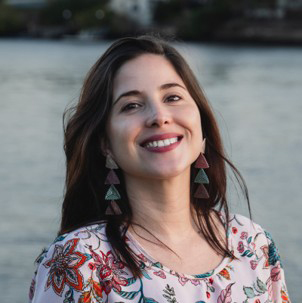 What is your PhD about?
My PhD research explores the relationship between Colombian Indigenous Peoples and “green” extractive activities in their territories as part of the implementation of national and global sustainable development policies. This research is situated in the Sierra Nevada de Santa Marta, Colombia, and brings a decolonial view of ecological justice and legal pluralism. The research aims to explore and analyse Colombian Indigenous community challenges to “green” extractive energy projects in their territories; to determine the intersection of Indigenous legal systems and state legal systems in extraction for ‘sustainable development’; and to understand different regional dynamics of “green” extractivism and practice of sustainable development, ecological justice, and legal pluralism.
Who was your placement with?
My placement was with Australian Earth Laws Alliance – AELA, a national not-for-profit organisation whose mission is to increase the understanding and practical implementation of Earth centred governance in Australia, with a focus on law, economics, education, ethics and the arts. To achieve its mission, AELA manages a range of multi-disciplinary programs, including the Australian Earth Laws Centre, Future Dreaming Australia (Indigenous Partnerships program) and new economy initiatives
What kind of work did you do?
During my placement at the AELA, I undertook a comprehensive literature review on Indigenous approaches to ecological justice and the concept of "caring for Country" in Australia. This research formed part of AELA's educational and advocacy initiatives, providing context and insights to enrich the content of webinars, courses, and community outreach organised by the National Convenor and the AELA team.
What was the best thing about the placement?
The best part of my placement at AELA was working alongside AELA's team. I gained insights into how ecological justice is understood and practised within Indigenous communities, which expanded my understanding of environmental governance in ways not typically covered in traditional legal or academic frameworks.
What did you learn that you didn’t know before?
During my placement with the Australian Earth Laws Alliance (AELA), I gained invaluable insights into Australia’s unique socio-political and legal context, particularly around Indigenous rights and ecological justice, which were entirely new to me as an international student from Colombia. Adapting to a different legal framework was initially challenging, especially as Australia's approach to environmental law and Indigenous rights is distinct from Colombia's.
My top tip for HDRs going on placement is:
My top tip for HDRs going on placement is to approach the experience with an open mind and a willingness to adapt to new cultural and professional contexts. Be prepared to step outside your comfort zone and engage with knowledge systems, practices, or perspectives that may be different from what you’re used to in academia.
Embrace the chance to listen, ask questions, and grow professionally and personally.
Jo Anderton: Placement with Thinkplace Australia
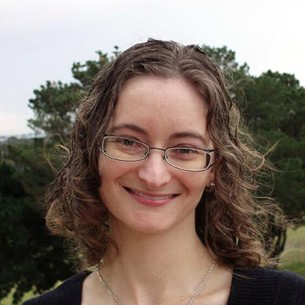 What is your PhD about?
I’m a writer of science fiction, fantasy and horror and I’m doing a creative writing PhD. In my project I’m writing a ‘speculative fiction memoir’ and making the case for the role of speculative fiction in telling true stories.
Who was your placement with?
ThinkPlace Australia, a consultancy with offices in Canberra, Sydney, Melbourne and Brisbane, as well as some overseas. They work with government, the public sector, NGOs, Defence, and others, helping them tackle complex challenges through design thinking, futures and foresight strategies, behavioural insights, and more. I was embedded with their Futures team.
What kind of work did you do?
I worked on two main projects: The first was to develop a set of ‘future signals for public sector leaders’. This involved interviewing as many members of ThinkPlace as I could, from the partners who had founded the company to new graduate recruits, to find out what they saw as the main drivers of change for the Australian public sector. We also focused on how ThinkPlace, and the sector as a whole, could begin to prepare — not for specific eventualities, but for the inevitability of uncertainty and disruption. As part of this process I also ran an internal online workshop, using science fiction as a framework to delve deeper into the thinking behind the key trends that had emerged from the interviews. This all came together in a report that I delivered and presented on at a companywide meeting.
The second project was a written response to the UN’s ‘Summit of the Future’, using ThinkPlace’s methodology and approach.
I also helped out where I could on individual projects, doing background research, putting together proposals, editing, proofreading and writing as needed.
What was the best thing about the placement?
I had been engaging in some Futures work before doing the placement, specifically through UQ’s WhatIf lab. We ran workshops with stakeholders like Defence and the UNHCR to translate the skills we have as science fiction writers into imagining potential futures. One of the best things about the placement was to see how similar work is done outside of the University, and investigate potential avenues for utilising a skill set that I have been building. Equally, the people I met at ThinkPlace were friendly, generous with their time and expertise, and just wonderful to work with. I have kept in contact with many of them, and am thankful to the placement for making these connections.
What did you learn that you didn’t know before?
I learned a lot about how Futures studies is utilised in different sectors. Also, ThinkPlace operates in a way that integrates its teams — no one team works on a project, there’s always a mix. This meant that while I was embedded with Futures, I got to work with people who were experts in design thinking, innovation, AI development, statistics, ethics, international security, Defence, government policy… I learned so much!
My top tip for HDRs going on placement is:
Don’t expect to be able to work on your thesis at the same time! I assumed, because I worked in publishing for a long time and I wrote novels during those years, that I’d be able to do my placement during the day and keep writing at night. I mean, I’d done it before! But I only lasted a week trying to do both before hitting a wall. The placement was challenging and engaging, as it should be, and took all of my energy and focus.
Anna Kho: Placement with Yamaha Music Australia
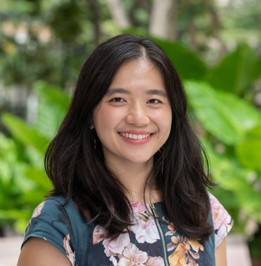 What is your PhD about?
My doctoral research aims to better understand the conduct of how school percussion instrumental music practice is facilitated and how we can better support schools in teaching and learning multiple percussion instruments. Specific to Queensland high school instrumental music learning, students practice on limited to no percussion equipment at home. In some cases, students may own a practice pad or student glockenspiel for home practice, but there is little understanding of this topic in existing literature. By investigating the roles of teachers, students, and parents, the research provides insight on how the three roles interplay across school and home contexts to inform students’ approach and decision making in practice.
Who was your placement with?
My placement was with Yamaha Music Australia, specifically the Band, Orchestral, Percussion, and Drums division of the company.
What kind of work did you do?
I was in a new established industry placement role in the company, where I analysed secondary data to communicate qualitative and quantitative findings and provide recommendations on how the company can better support Australian drums and percussion teachers. Currently, the company provides free Education Outreach services for school instrumental music teachers, and endeavours to better support drums and percussion teachers through their resources and networks.
What was the best thing about the placement?
The hands-on experience of providing research services and expertise in the industry was the inspiration I needed in my final year of the degree. As a doctoral candidate that operates in isolation, at times I find the academic milestones can deter from the real-life purpose of the research. I left the placement feeling passionate and excited in how my research will directly support Australian drums and percussion teachers, and I hope to continue providing direct support with interdisciplinary skills across research, education, and music.
What did you learn that you didn’t know before?
This experience widened my understanding of the possible career opportunities and exercised my transferability and communication of research skills. In addition to communicating research within my discipline, I also integrated marketing research and terminologies to engage the wider audience of company staff members. As the only researcher position in the company, I held responsibility in interpreting and communicating research that would inform an entire company’s approach to how they supported teachers across Australian schools. I found discussing placement experiences with fellow colleagues assisted in developing my industry communication skills and confirmed any uncertainties I felt throughout the experience.
My top tip for HDRs going on placement is:
Due to time limitations, ensure to establish clear expectations and realistic goals over the course of the placement. More importantly, indulge in the social and cultural aspects of the workplace, as you can learn new knowledge and skills that can widen your employability and network.
I also wanted to add that I reached out to that company, as they had never had a research placement position before. I think that may be the case for some HASS students, particularly those in a niche area. Unfortunately, I also missed out on the industry placement scholarship, so I would advise those to complete it within their living stipend timeframe to gain the full scholarship extension. Had I known about this opportunity before then, I would have organised it in advance. So, my placement was very much self-funded, but the professional experience was priceless!