
Serial Lynch: Twelve-Tone Operations in the Visual and Cinematic Work of David Lynch
David Lynch has made a series of works he calls Ricky Boards. In the most famous of these, Bee Board(c. 1986–87), twenty identical bees are pinned to an entomological board, each labelled with a different name: Ronnie, Hank, Dougie, Harry. The procedure is deceptively simple: units taken to be identical are given individual identity through naming, such that when they are reinserted into their set, the whole no longer overrides the individual elements. The set must be engaged with differently. This paper argues that Lynch's Ricky Boards offer a key to understanding the compositional logic at work across his oeuvre, a logic that finds its closest analogue not in the visual arts but in serial music.
To make this point, I will examine the paradigmatic example of serial music, Arnold Schoenberg's twelve-tone method. This treats all twelve pitches of the chromatic scale with equal importance, preventing any single tone from attaining what he called "the privilege of supremacy." The tone row generates the entire composition through systematic permutation: Prime, Retrograde, Inversion, Retrograde Inversion. In this way, the same material, transformed through procedural operations, produces difference from identity. Here we see a clear analogy with Lynch’s Ricky Boards, but in this essay I will propose that this same principle helps us understand other elements of Lynch’s œuvre, and in particular the structural architecture of Lynch's bifurcated films—Lost Highway (1997) and Mulholland Drive (2001)—that operate according to a strikingly similar logic. In both films, the second half presents not a different story, but the same narrative elements subjected to systematic inversion: Fred becomes Pete, Betty becomes Diane, the inadequate lover becomes virile, the vulnerable woman becomes powerful, intervals that moved downward now move upward. The same "pitches," the same actors, the same desires—but with their direction reversed.
Reading Lynch through serial music shifts critical attention from what these transformations mean (for in spite of many attempts to make them “mean” something, they may well ultimately mean nothing) to how they operate, shifting the focus from content to procedure. Both Lynch and the serialists disrupt teleological expectation, producing works that move forward without progressing toward resolution, generating difference without hierarchy—an immanent mode entirely consistent with Lynch’s creative practice oftentimes based in Transcendental Meditation. By taking this approach I will unpack some of the metaphysical dimensions of Lynch’s work and suggest why it may be more than important than ever in our contemporary moment.
The Speaker
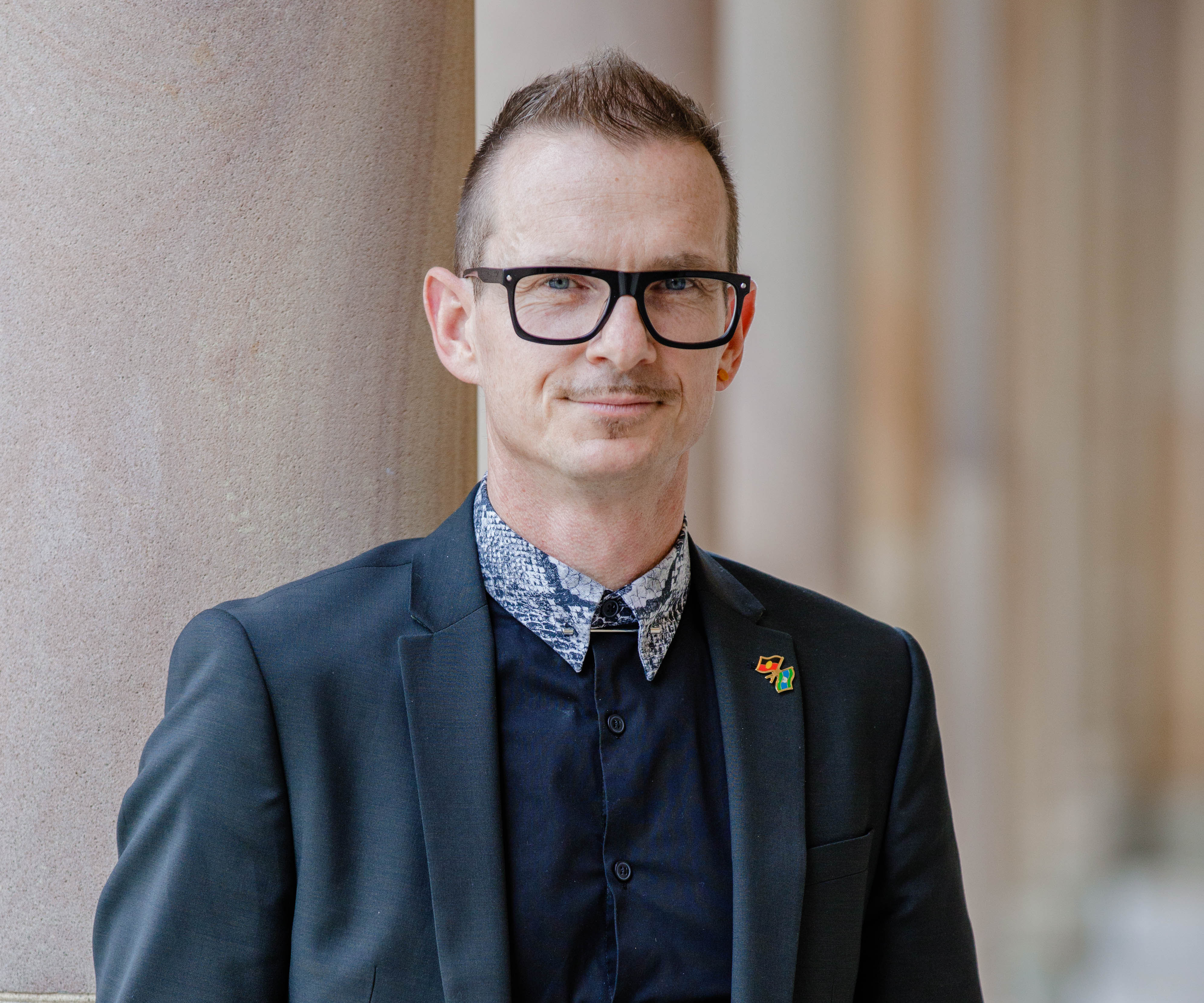 Greg is Head of the School of Languages and Cultures and Professor of French at the University of Queensland, a Fellow of the Australian Academy of the Humanities and Chair of the AAH’s Languages and Cultures Committee, a Senior Fellow of the Higher Education Academy, co-Editor-in-Chief of Culture, Theory and Critique and author of numerous books, chapters and articles in the fields of film, literature, sound studies, music and critical theory.
Zoom link: https://uqz.zoom.us/j/89861889999
About The Translating and Interpreting + Culture Cluster seminar series
This seminar series features presentations from scholars and industry professionals on topics ranging from interpreting practice and multilingual communication to literary analysis and emerging technologies such as AI. Each session offers insights into real-world applications and current research, with opportunities for discussion across disciplines.